In June 2025, U.S. Army Cadet Command announced the largest restructuring of Senior Army ROTC in decades. The plan inactivates some host programs, reclassifies dozens of others, and closes the 1st Brigade headquarters at Fort Knox. For affected cadets and families, the practical question is simple: what does this mean for my scholarship and my path to a commission.
This is a moving target. The figures below are from the official announcement on June 27, 2025. The Army has since revised some decisions, including reversing several planned closures, so confirm your specific program’s current status before you act. Our Army ROTC schools directory tracks each program.
What the Rebalance Changes
The announcement reshapes the national ROTC footprint at two levels: host units and the extension units attached to them.
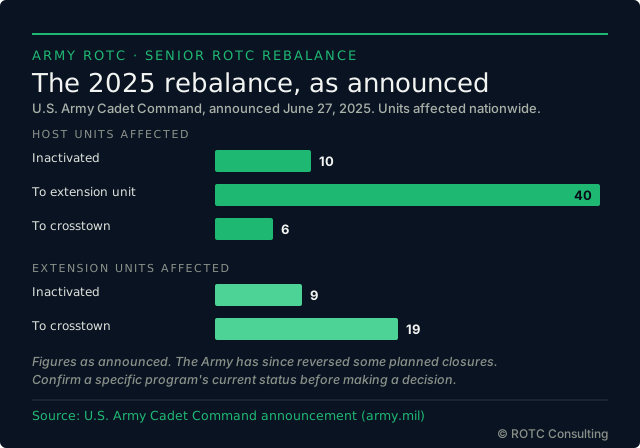
Host units absorbed the largest share. Ten will be inactivated entirely, forty will be reclassified as extension units that keep on-campus cadre but merge administrative support, and six will convert to crosstown relationships with no on-campus cadre. Among existing extension units, nine will be inactivated and nineteen will move to crosstown. The 1st Brigade headquarters at Fort Knox is inactivating, and the senior military colleges realign to other brigades with no impact to cadet training. Army leaders say ROTC access remains at roughly 900 campuses nationwide.
Why the Army Is Doing This
The Army is sizing officer production to today’s force, not the higher commissioning numbers of the Iraq and Afghanistan years. With a surplus of new lieutenants, some were waiting months for their Basic Officer Leader Course, which is inefficient for the cadet and the Army. Budget pressure and a civilian workforce reduction, about 168 positions or roughly 12 percent of the affected workforce, pushed Cadet Command to consolidate. Some universities, despite strong reputations, were not commissioning enough cadets to justify a full host program.
Who Is Affected, and How
The impact depends on a cadet’s year group and program status.
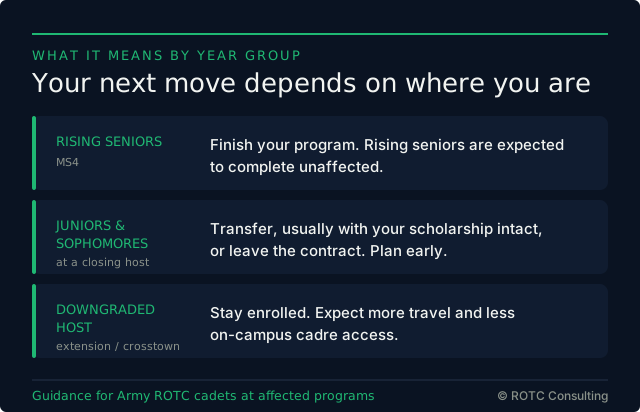
Rising seniors (MS4s) are expected to finish their programs unaffected. Juniors and sophomores at an inactivated host face a real decision: transfer to another program, usually with the scholarship intact, or step away from the contract. Cadets at a downgraded host stay enrolled, but should expect more travel to a host campus, fewer on-campus resources, and less direct access to cadre.
Universities feel it too. Many have invested decades and offer their own room-and-board or tuition incentives on top of the Army scholarship. Losing host status removes a leadership pipeline from campus, and some schools may be cautious about rebuilding a program later.
What Cadets and Families Should Do Now
Treat this as a planning problem, not a crisis. The concrete steps:
- Confirm your program’s current status. Decisions have shifted since the announcement. Check our schools directory or ask your cadre directly.
- If your host is closing, ask early about transferring with your scholarship and which nearby programs are accepting cadets.
- If your program is becoming an extension or crosstown unit, ask specific questions: travel time to the host, where physical training and labs will happen, and how often you will see cadre.
- Keep academics and fitness on track. A strong record makes a transfer cleaner and keeps you competitive wherever you land.
The Bottom Line
This is a significant change, and for some cadets it means a different route than they planned. The path to an Army commission remains open, and a scholarship usually moves with the cadet. The work now is homework: know your program’s status, understand your options, and ask the hard questions early.
Frequently Asked Questions
If my host program is inactivated, do I lose my Army ROTC scholarship?
Usually not. Cadets at inactivated programs are generally able to transfer to another Army ROTC program with their scholarship intact, though you should confirm the specifics with your cadre and the receiving program. The harder part is logistics: finding a program that fits your major and is accepting transfers. Start that conversation early.
What is the difference between a host, an extension, and a crosstown program?
A host program has its own cadre and runs ROTC on campus. An extension unit keeps cadre on campus but shares administrative support with a nearby host. A crosstown program has no on-campus cadre, and its cadets train at a nearby host campus. A downgrade usually means more travel and less day-to-day cadre access.
Are the announced closures final?
No. The June 27, 2025 announcement was a plan, and the Army has already reversed several planned closures. Program status can still change, so verify your specific school before making a decision rather than relying on the original list.