Your student walks into the scholarship interview already sounding like the officer they want to become.
The scholarship comes down to one short conversation with officers trained to read people. Interview Preparation is live coaching with retired officers who have evaluated candidates like your student. Your student learns to answer any question as themselves, and to hold the room while they do it.
The file is already written. The interview is what is still in play.
Your student has done the work. Strong transcript, real activities, a clean application. Army, Navy and Marine Corps, and Air Force ROTC each require a scholarship interview, and every branch scores it. An officer interviews your student, and that interview form goes to the selection board with the rest of the file. The interview is one part of a complete scholarship packet, and it can be the most important part of it.
A strong teenager on paper is not a strong interviewee. Most freeze on why this branch, answer in adjectives instead of stories, and have never once sat across from a senior officer while being scored. The interviewer is not grading a recitation of achievements. They are weighing whether this student could stand in front of a platoon in 4 years and be followed.
They get one interview. There is no retake.
One interview can outweigh four years on paper.
The interview is one of the largest single blocks of the whole-person evaluation. A mediocre conversation can undo a strong transcript and a full record of sport and leadership.
An ROTC scholarship covers tuition, fees, a monthly stipend, and a book allowance for four years. At many universities, that is worth over $100,000. The strongest candidate on paper loses to the one who was ready in the room.
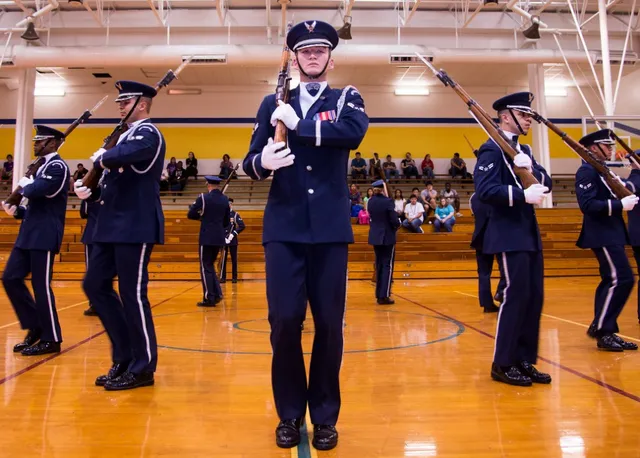
Not a list of questions. Preparation for the room itself.
Coached by officers who have evaluated these interviews
The officers preparing your student have interviewed and evaluated ROTC scholarship candidates themselves. They coach to what the interviewer is trained to look for, not to a list of questions off the internet.
Authentic answers, never scripts
A memorized answer falls apart on the first follow-up. Your student learns to speak as themselves, so the composure holds when the question has no prepared answer.
Full mock interviews, on camera
A mock interview is how a student actually prepares. The nerves get spent in practice, so by the real interview your student has already sat across from a senior officer and held the conversation more than once.
A graded library of real interviews
Your student hears what a strong answer and a weak answer actually sound like, from roughly 20 recorded example interviews, then practices against that standard.
Prepared for the exact interview
Army, Air Force, Navy, or the Marine Corps option, including the hardest questions each branch asks and the motivation each one is listening for.
We stop at ready, not at a number
The coaching is measured by whether your student can perform, not by a count. We keep working until they are.
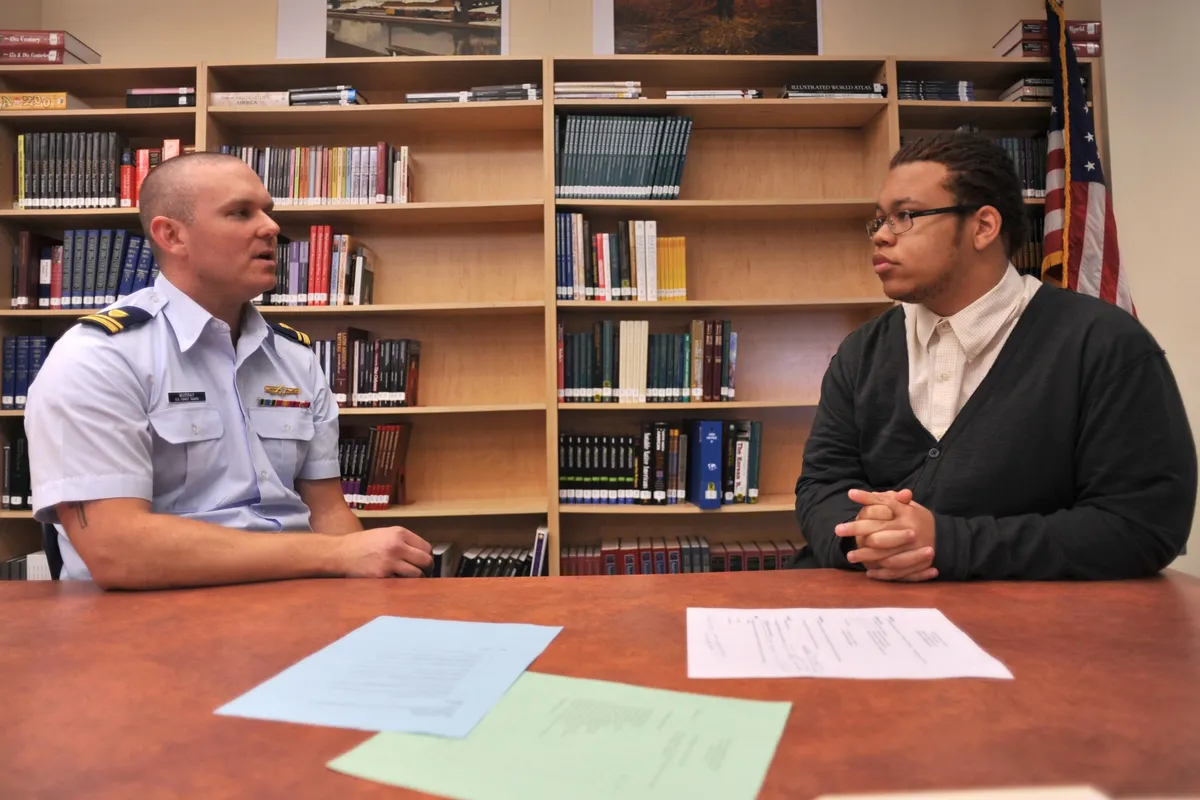
Everything that goes into being ready.
Interview Preparation is not generic advice, and it is not a single conversation. Here is exactly how it runs and what is included.
- Format
- Live and one-on-one, over Zoom. Never a group.
- Sessions
- A minimum of 3, and the coaching continues until your student is ready. Many students need more.
- Each session
- About an hour, spaced over at least a month so your student practices and improves in between.
- Prepared for
- Your student's exact interview: Army, Air Force, Navy, or the Marine Corps option.
- Coaching from retired officers who have interviewed and evaluated ROTC scholarship candidates.
- The full online interview course: video instruction and roughly 20 recorded real example interviews.
- The story-bank method: 8 true stories built across leadership, failure, teamwork, and service, so any question has an honest answer ready.
- Coaching across the 5 things that get scored: structure, evidence, judgment, presence, and fit.
- A clear plan for the night before and the day of the interview.
3 disciplines, practiced until they hold.
Your file, read the way it will be read
Coaching starts with the application itself: transcript, activities, essays. Your student learns what their own record says to an evaluator before anyone asks them about it.
Live practice with a retired officer
Everything runs 1:1 over Zoom. Your student practices the real exchange: presenting their background, speaking to their own motivation, holding a conversation with a senior officer. The format alone settles most of the nerves.
Composure under follow-up questions
Interviewers probe. A first answer invites a second question, and the second is where composure shows. We press into the follow-ups until your student can be pushed and the answers stay authentic under pressure.
We want at least a month with your student before the interview, so the sessions are spaced and each one builds on real practice in between. Three sessions is the minimum. Many students need more, and the coaching continues until your student is interview-ready. Readiness is the finish line, not a session count.
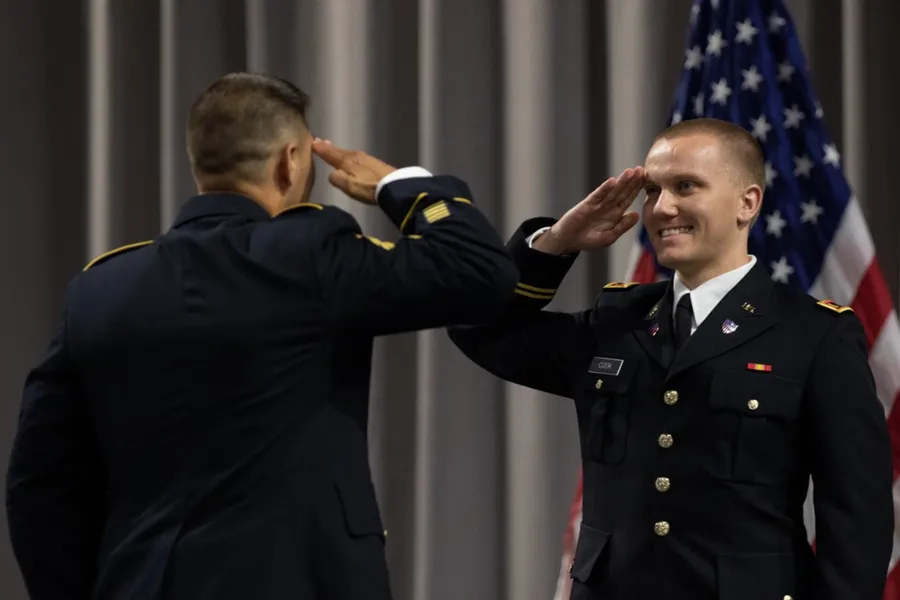
From a parentYour service wasn’t just helpful; it was transformational. Our son went from not knowing where to start to earning a 4-year Army ROTC scholarship. The interview preparation alone was worth every penny.
Picture the version of your student the interviewer remembers.
Composed from the first minute. Answering why this branch with conviction the officer believes. Turning a question about a summer job into evidence of leadership. Telling a real story on demand instead of reaching for an adjective. Steady when the question has no prepared answer.
That is the student who walks out with an officer already prepared to advocate for them. That is what we coach to.
The interview decides it. Start with the Blueprint.
Interview Preparation begins after the ROTC Scholarship Blueprint. The Blueprint, led by LTC Kirkland, establishes where your student stands and what to sharpen before the interview.
Schedule your ROTC Scholarship Blueprint.